Walnut blasting for gas-powered engines
Intake valve carbon cleaning for gas direct-injection engines.
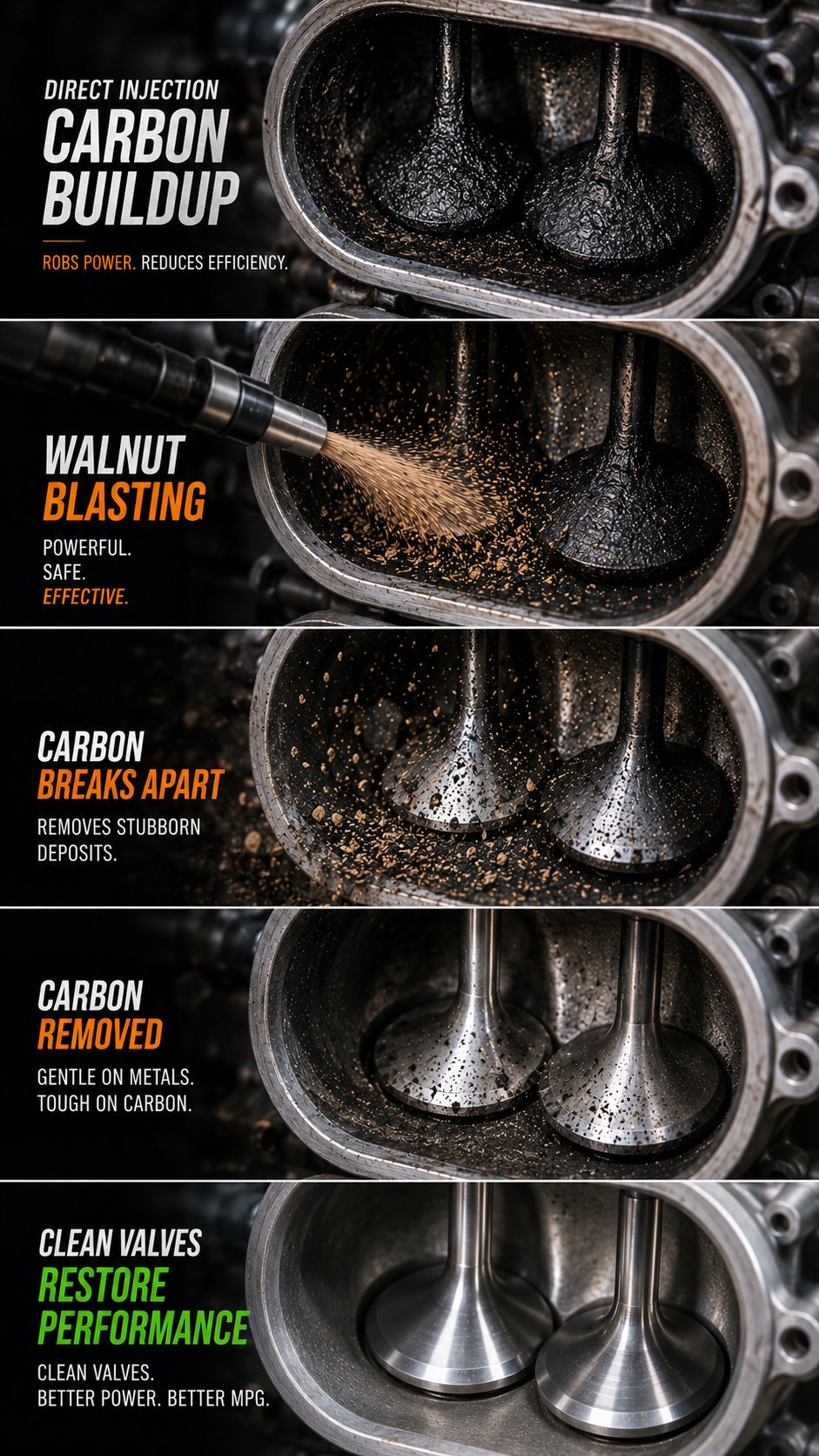
When carbon buildup is confirmed, walnut blasting can restore airflow and help resolve rough idle, misfires, hesitation, and performance concerns.
Why carbon buildup happens.
Many direct-injection engines do not wash fuel across the intake valves the same way older port-injection engines do. Over time, oil vapor and deposits can collect on the valves and restrict airflow.
Doug's Automotive Service recommends walnut blasting after inspection and diagnosis confirm that carbon buildup is part of the problem.
Before and after
Carbon cleaning, walnut blasting, and restored performance.
This visual walkthrough gives customers the same story they see in the shop: buildup, cleaning, carbon removal, and smoother airflow through clean intake valves.
Fuel injector cleaners
Fuel system service for deposits and drivability concerns.
Doug's Automotive Service can also recommend fuel injector cleaner or fuel system service when deposits, maintenance history, fuel quality, or drivability symptoms point that direction.
Walnut blasting cleans the intake valves. Fuel injector cleaner services target the fuel side of the system. On some vehicles, both may be discussed as separate services after diagnosis.
Common questions
What customers should know.
Is walnut blasting the same as fuel injector cleaner?
No. Walnut blasting physically cleans intake valve carbon buildup. Fuel injector cleaners target deposits in the fuel system and injectors.
Does every direct-injection engine need walnut blasting?
No. The shop recommends it when symptoms, inspection, or diagnosis point to intake valve carbon buildup.
What symptoms can carbon buildup cause?
Carbon buildup may contribute to rough idle, cold-start misfires, hesitation, poor airflow, or drivability concerns on some direct-injection engines.